
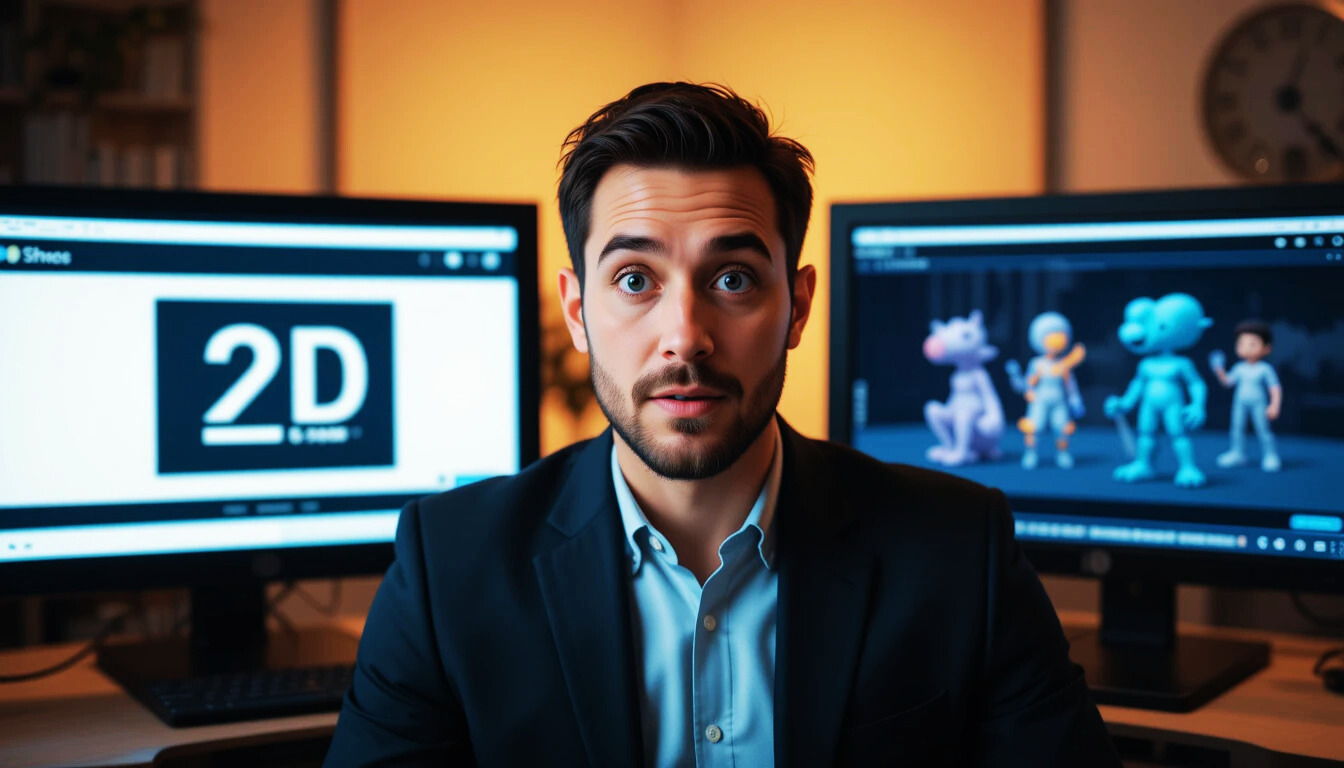
2D vs. 3D Animation: Which is Right for Your Project?
What Is a 2D Animated Explainer Video?
What Is a 3D Animated Explainer Video?
2D vs. 3D: Which Works Best for Your Industry?
Budget & Timeline Considerations
How to Make an Explainer Video That Converts
Final Thoughts
2D vs. 3D Animation: Which is Right for Your Project?
When exploring how to make an explainer video, one of the first decisions you’ll face is whether to use 2D animation or 3D animation. Both formats can simplify complex ideas, educate audiences, and boost engagement. But the choice depends on your industry, budget, and the story you need to tell. If you’re a Marketing Director, Brand Manager, Content Manager, attorney, medical device manufacturer, or training professional in the USA, this guide will help you decide which animation style is best for your project.
What Is a 2D Animated Explainer Video?
2D animation uses flat, two dimensional graphics and characters. It’s one of the most popular choices for brands learning how to make an explainer video because it’s cost effective, quick to produce, and highly versatile.
Best for:
- Explaining simple concepts clearly
- Corporate training videos
- Social media campaigns
- Professional services like law firms or consulting practices
Why choose 2D?
- Affordable for startups and mid sized companies
- Easy to update or repurpose for future campaigns
- Proven track record for brand storytelling and corporate communication
What Is a 3D Animated Explainer Video?
3D animation creates lifelike, three dimensional visuals. It’s an excellent option for companies asking how to make an explainer video that feels immersive, cutting edge, and visually impressive.
Best for:
- Demonstrating medical devices or pharmaceutical products
- Showcasing complex technology or product engineering
- Creating high impact corporate presentations
- Standing out in highly competitive markets
Why choose 3D?
- Realistic and detailed visuals
- Perfect for industries like healthcare, law, and manufacturing where precision matters
- Memorable brand differentiation
2D vs. 3D: Which Works Best for Your Industry?
- Law Firms & Attorneys: 2D is ideal for simplifying legal services for potential clients.
- Medical Device & Pharmaceutical Companies: 3D shines when showcasing product design, safety, or functionality.
- Corporate Training & Development: 2D offers scalability for training modules and employee onboarding.
- Marketing & Social Media: Both work well 2D is budget friendly, while 3D grabs attention in competitive feeds.
Budget & Timeline Considerations
When deciding how to make an explainer video, consider your budget and timeline.
- 2D animation: Faster turnaround and lower cost.
- 3D animation: Higher production investment, but long term impact.
How to Make an Explainer Video That Converts
- Define your goal : Awareness, training, product launch, or brand storytelling.
- Know your audience : Tailor your style to decision makers, end users, or trainees.
- Choose animation style : 2D for clarity and affordability, 3D for impact and precision.
- Work with professionals : An experienced animation agency ensures your message aligns with brand strategy.
- Measure performance : Track engagement, retention, and conversions to refine future content.

Final Thoughts
If you’re wondering how to make an explainer video that resonates with your audience, the choice between 2D and 3D animation comes down to clarity, impact, and industry needs. Marketing leaders, attorneys, pharmaceutical companies, and training professionals can all benefit from the right animation style. Whether you choose 2D for simplicity or 3D for depth, your explainer video can become one of the most powerful tools in your corporate communication strategy.